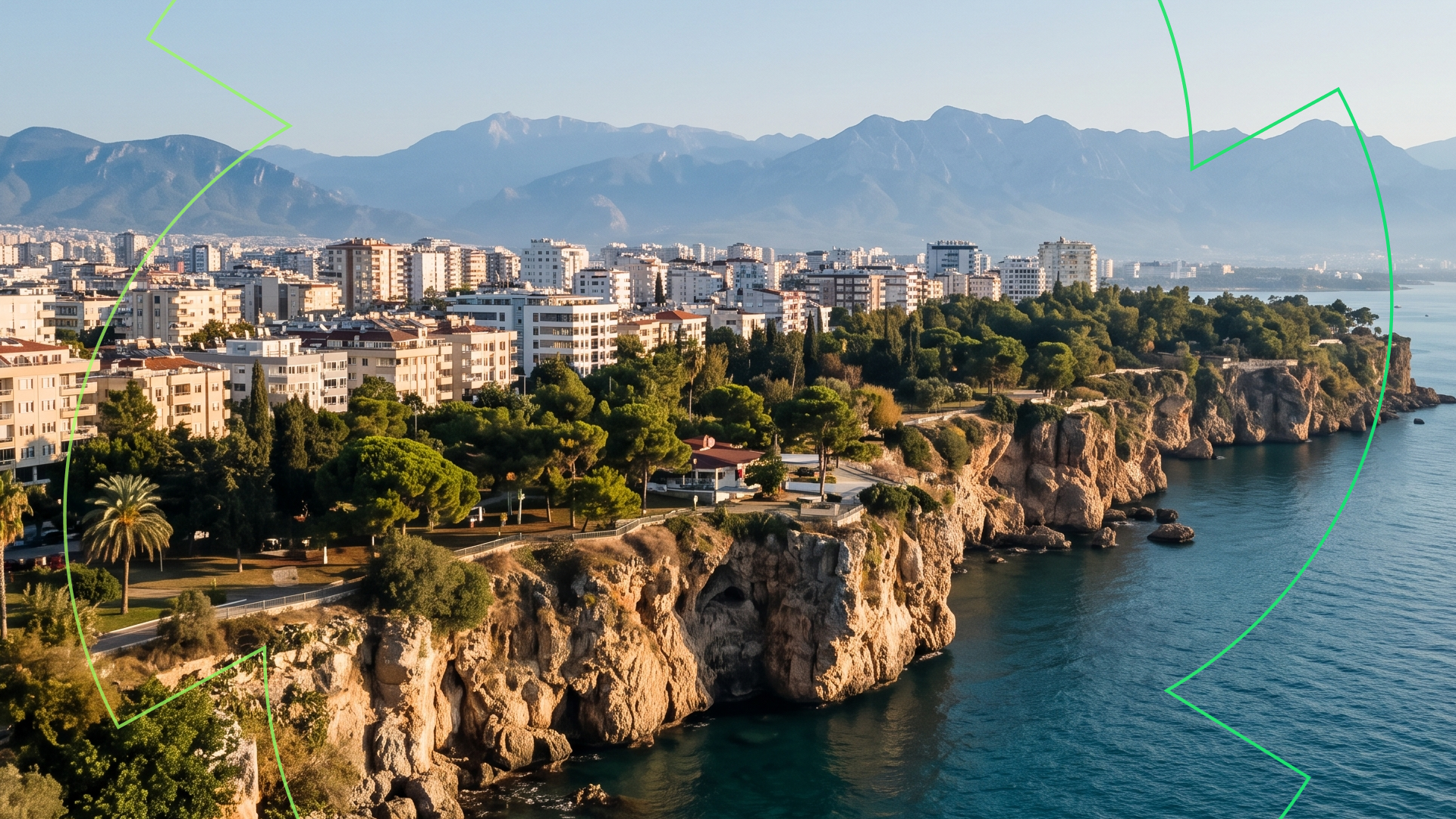


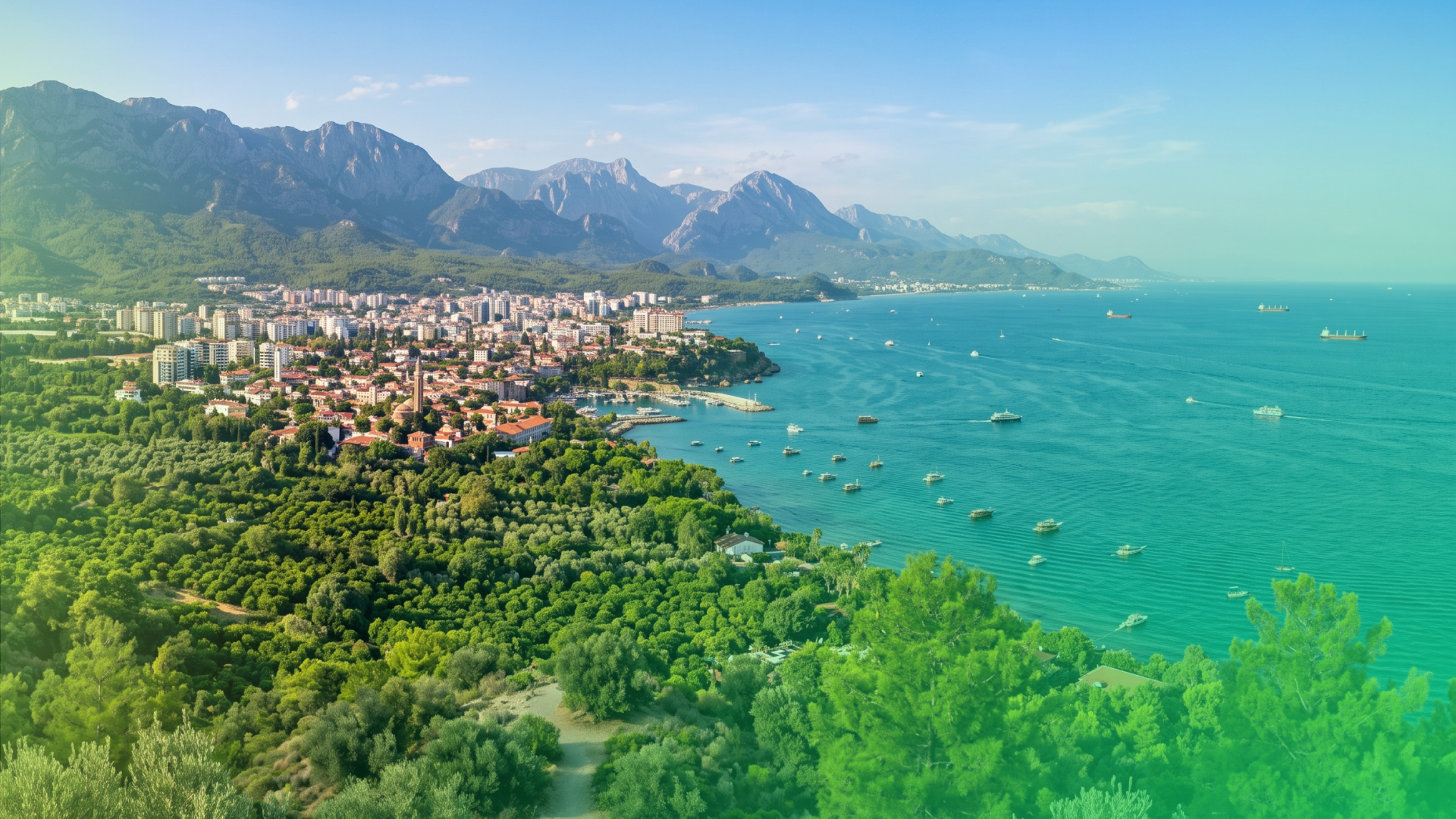
For two weeks this November, the climate calendar’s largest fixture moves to Antalya. Around 100,000 participants are expected between 9 and 20 November 2026, making COP31 Antalya the biggest international event Türkiye has ever hosted.
It is also the first COP to be run by two countries at once.
Türkiye holds the Presidency and hosts the conference; Australia runs the negotiations. That arrangement explains most of the confusion around this summit, and it is where any guide to COP31 Antalya has to start.
→ Below: the dates, who is actually in charge, what is on the agenda, what COP30 left unfinished, and how to get in.
In short
- COP31 runs from 9 to 20 November 2026 in Antalya, Türkiye. Roughly 100,000 participants are expected.
- For the first time, the presidency and the management of the negotiations are split between two countries. Türkiye holds the COP31 Presidency and hosts the summit; Australia runs the negotiation process as President of Negotiations.
- The official Action Agenda has ten themes. Clean Energy Transition and Green Industrialization speak most directly to industrial companies.
- The largest unresolved file carried over from COP30 is the language on moving away from fossil fuels. On finance, a goal of 1.3 trillion dollars a year is on the table.
- The host country arrives with new climate legislation of its own: a Climate Law in force since 9 July 2025 and an Emissions Trading System regulation published on 27 August 2026.
When and where is COP31 Antalya?
COP31 Antalya takes place from 9 to 20 November 2026 in Antalya, on Türkiye’s Mediterranean coast. Roughly 100,000 participants are expected across the two weeks.
COP stands for the Conference of the Parties, the annual meeting of the countries party to the United Nations Framework Convention on Climate Change. The thirty-first of those meetings is the one being held in Türkiye. The UNFCCC conference page is the authoritative source for scheduling as it firms up.
There is a practical reason Antalya was chosen over larger Turkish cities.
Only a handful of places can absorb close to a hundred thousand participants, their delegations and the side events at the same time, and that comes down to accommodation and congress infrastructure rather than prestige.
Across the two weeks there are thematic days, the Leaders’ Summit and a large number of side events. As the agenda thickens, the real bargaining usually slips into the second week.
Who is running COP31 Antalya, Türkiye or Australia?
This is the most frequently misreported thing about COP31, and both answers are correct, because there are two separate roles.
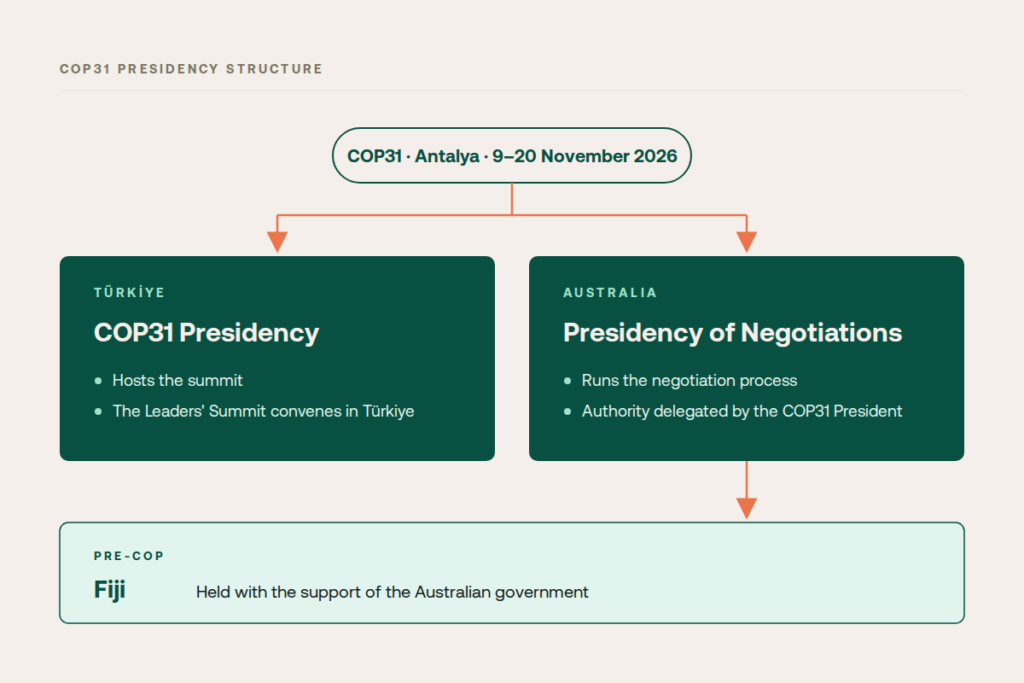
Türkiye holds the COP31 Presidency. The President is Murat Kurum, Minister of Environment, Urbanization and Climate Change. The summit takes place in Türkiye and the Leaders’ Summit convenes there as well.
Australia runs the negotiation process as President of Negotiations. The role was defined in a formal document the parties agreed on, and it is structured as an authority delegated by the COP31 President.
How this came about matters for reading the summit.
Türkiye and Australia had both bid to host the same year, and rather than one withdrawing, the two settled on an unusual formula: the conference in Türkiye, the negotiations under Australia.
It is the first time in the history of the COP that the presidency function has been divided this way.
The Pre-COP is being held in Fiji, with the support of the Australian government.
It is a deliberate choice that puts the island states most affected by climate change at the center of the preparatory process. While the host country was being decided, the point Australia kept drawing attention to was precisely the prospect of Pacific island nations going under water.
Blue Zone and Green Zone: what is the difference?
A COP is made up of two separate areas, and the distinction decides what attending is actually worth to you.
The Blue Zone is where the formal negotiations happen. It is administered by the United Nations and only accredited participants may enter. Country delegations, observer organizations and accredited press are found here.
The Green Zone is open to the public. Exhibitions, events and awareness activities take place there, and corporate visibility work happens largely in this area.
What is on the COP31 agenda?
The COP31 Action Agenda published by the host presidency has ten themes. The table below summarizes what each one tends to mean for companies.
| Theme | Scope | What it means for companies |
|---|---|---|
| Clean Energy Transition | Renewable capacity, grid, storage | Expected acceleration in renewable procurement, solar investment and green electricity certification |
| Green Industrialization | Low-carbon production in industry | Standardization of emissions measurement per unit of output in carbon-intensive sectors |
| Climate Implementation Bridge | Moving from pledges to delivery | Pressure to move from declared targets to measurable implementation |
| Climate-Resilient Cities | Urban infrastructure and resilience | Energy performance and climate risk assessment across building and facility portfolios |
| Zero Waste | Waste management and circularity | Waste data brought into the carbon inventory |
| Food Security | Agriculture and food systems | Cold chain energy and Scope 3 in food and retail chains |
| Oceans and Seas | Marine ecosystems | Emissions reporting in logistics and shipping |
| Dynamic and Resilient Health Systems | Health and climate | Uninterrupted energy and efficiency in healthcare facilities |
| Youth and Education | Capacity building | In-house sustainability capability |
| Rio Synergies | Climate, biodiversity and desertification conventions taken together | Reporting frameworks converging |
What did COP30 leave unfinished?
Every COP starts where the last one stopped. Four main files travel from COP30, which closed in Belém, to Antalya.
Finance
A goal of mobilizing 1.3 trillion dollars a year in climate finance by 2035 was accepted. How that figure is raised, and from whom, is still open-ended.
Adaptation finance
Tripling adaptation finance by 2035 was agreed. The tracking mechanism will be discussed in Antalya.
Loss and Damage Fund
The fund became operational and its replenishment cycles were defined. The next question is its size.
Moving away from fossil fuels
This is the file COP30 could not resolve. More than eighty countries wanted an explicit commitment to phase out, while the final text settled for a reference to the existing consensus. The matter was handed to a roadmap still to be drawn up, and it is set to be the most contested item in Antalya.
The host country’s own climate rules
Host countries tend to arrive with something to show, and Türkiye arrives with a climate legislative framework built over the past two years. For anyone who trades with, manufactures in or reports on operations in the country, this is the most concrete part of the summit.
The Climate Law came into force on 9 July 2025. It put the 2053 net zero target on a legal footing and opened the way for an emissions trading system to be established.
The Emissions Trading System regulation was published in the Official Gazette on 27 August 2026, and the pilot period began the following day. The regulation sets out the system’s scope, emissions caps, allocation rules and the monitoring, reporting and verification obligations.
Read together, the two pieces of legislation produce this picture:
Türkiye is no longer a country that declares a climate target, but one that prices emissions. COP31 Antalya will be the international showcase for that shift.
Key dates for COP31
Two calendars run into COP31 Antalya: the host country’s legislative one and the conference itself. Together they look like this:
| Date | What happens |
|---|---|
| 9 November 2026 | COP31 opens in Antalya |
| 10–12 November 2026 | World Leaders Climate Action Summit |
| 20 November 2026 | Closing and final text |
Accreditation and side event application dates should be confirmed through the UNFCCC and cop31.tr.
What changes for companies before COP31 Antalya?
Texts coming out of a summit do not turn into obligations overnight. But three trends reach company agendas without waiting for a date, and none of them are specific to the host country.
→ First, the verifiability of carbon data. An emissions trading system requires declared emissions to be independently verified, and verification does not work with estimate-based inventories.
→ Second, carbon border pressure. For producers exporting to the European Union, carbon intensity is now a cost line. One of the reasons Türkiye built its own system is exactly this.
→ Third, scope expansion. Scope 2 emissions from energy consumption can be calculated at most companies. The area that causes real difficulty is Scope 3 across the value chain. The food, logistics and industry items on the COP31 agenda look straight at that area.
How do you attend COP31 Antalya?
Access to the Blue Zone requires accreditation, and accreditation runs through the UNFCCC rather than the host country. Companies that do not hold observer status usually attend through sector associations, chamber delegations or already accredited organizations. The UNFCCC also publishes practical information for participants for the conference itself.
The Green Zone is open to the public. It is used as an exhibition and event space and offers a more accessible footing for corporate visibility.
How should you follow COP31 Antalya?
Preparing for COP31 Antalya is on everyone’s agenda in energy and carbon, but one point tends to get missed. COP31 is not an event to prepare for, it is a program whose outcomes should be followed.
Following what is discussed at the World Leaders Climate Action Summit on 10 to 12 November matters in particular, given the possibility that those talks feed into 2027 regulation.
Staying informed in the run-up also matters, especially for people who deal directly with carbon.
To keep up with the COP31 Antalya agenda, remember to sign up for our weekly and monthly newsletters.
Subscribe to the Apollo newsletter to follow COP31 updates & insider information 👉
Sıkça sorulan sorular
When is COP31 and where is it being held?
COP31 runs from 9 to 20 November 2026 in Antalya, Türkiye. Roughly 100,000 participants are expected.
Who is hosting COP31?
Türkiye hosts COP31 and holds the COP31 Presidency. The President is Murat Kurum, Minister of Environment, Urbanization and Climate Change. The negotiation process is run separately by Australia as President of Negotiations.
Why are two countries running COP31 together?
Türkiye and Australia both bid to host the same year. The parties settled, in a formal document, on the summit being held in Türkiye and the negotiation process being run by Australia. The Pre-COP is being held in Fiji, a Pacific island nation.
Why are two countries running COP31 together?
Türkiye and Australia both bid to host the same year. The parties settled, in a formal document, on the summit being held in Türkiye and the negotiation process being run by Australia. The Pre-COP is being held in Fiji, a Pacific island nation.
What is the difference between the Blue Zone and the Green Zone?
The Blue Zone is where the formal negotiations take place. It is administered by the United Nations and only accredited participants may enter. The Green Zone is open to the public and is used for exhibitions and events.
What is on the COP31 agenda?
The official Action Agenda has ten themes, from Clean Energy Transition and Green Industrialization to Zero Waste and Rio Synergies. Alongside it, four unresolved files carry over from COP30: climate finance, adaptation finance, the Loss and Damage Fund and the language on moving away from fossil fuels.
Can my company attend COP31?
The Blue Zone requires accreditation through the UNFCCC. Companies without observer status usually attend through sector associations, chamber delegations or already accredited organizations. The Green Zone is open to the public and is more accessible for corporate events.